
Deep Cleaning: The Complete Guide to a Healthier Home
What a deep clean covers, why it matters for your health, and a full room-by-room checklist — from Lucy’s Cleaning Home in the Merrimack Valley.
Deep cleaning is the top-to-bottom reset your home gets a few times a year — the scrubbing, degreasing, and detailing that a quick weekly tidy always skips. Regular cleaning keeps surfaces looking neat. Deep cleaning reaches the built-up grime, allergens, and bacteria hiding underneath. If you’ve ever wondered what the difference actually is (and whether it’s worth the effort), this guide walks you through it room by room.
At Lucy’s Cleaning Home, we’ve spent more than 16 years deep cleaning homes across the Merrimack Valley and southern New Hampshire. Below is the same approach we use on the job — what deep cleaning covers, why it matters for your health, how often to do it, and when it makes sense to hand it off.
Want the deep clean without the weekend? We handle the whole checklist for you.
Cleaning services in Haverhill, MA — request a free quote today.
What is deep cleaning?
Deep cleaning is a thorough, detail-focused clean that covers the surfaces and hidden spots routine cleaning doesn’t touch. Think baseboards, grout, inside the oven, behind the toilet, under furniture, and the tops of door frames. Where a standard clean is about maintenance, a deep clean is about resetting the whole space.
Here’s a simple way to picture it. Regular cleaning is what you do weekly to stay on top of daily mess. Deep cleaning is what you do seasonally — or before a move, a party, or after illness — to remove the buildup that regular cleaning leaves behind. One keeps the surface tidy; the other gets the home genuinely clean.
Deep cleaning vs. regular cleaning at a glance
- Regular cleaning: wiping counters, vacuuming floors, quick bathroom wipe-downs, emptying trash, tidying up. Weekly or biweekly.
- Deep cleaning: scrubbing grout and tile, degreasing the oven and range hood, cleaning inside appliances, washing baseboards and vents, dusting high and low, moving furniture. Every few months.
Why does deep cleaning matter for your health?
Deep cleaning matters because the grime you can’t see is often the part that affects your health. Detectable dust-mite allergen turns up in roughly four out of five U.S. homes, most commonly in beds, upholstery, and carpets (American Lung Association). Those allergens are a leading trigger for asthma and year-round allergies — and a quick surface clean rarely reaches them.
The kitchen is a bigger culprit than most people expect. In its household germ study, the NSF found the kitchen — not the bathroom — held the highest levels of contamination in the home. The germiest single item was the sponge: 86% carried mold and yeast and 77% carried Coliform bacteria. The kitchen sink often harbors more fecal bacteria than a flushed toilet.
A national study found used kitchen sponges can hold up to 82 billion bacteria in a single cubic inch (NSF). None of that goes away with a daily wipe-down — it takes the focused scrubbing, disinfecting, and replacing that a deep clean is built for.
How often should you deep clean your home?
Most homes benefit from a full deep clean every three to four months, with a few high-use areas cleaned more often. That cadence keeps allergens and grease from building to the point where they’re hard to remove. Homes with pets, kids, allergies, or heavy foot traffic usually land on the shorter end of that range.
A practical rhythm looks like this:
- Weekly: kitchen counters and sink, bathrooms, floors, trash.
- Monthly: inside the microwave, range hood filter, baseboards in high-traffic rooms, under-couch areas.
- Every 3–4 months: full deep clean — oven, grout, vents, windows, behind and under furniture.
- Seasonally or by event: spring cleaning, before hosting, or after an illness or renovation.
In our experience across the Merrimack Valley, the homes that stay easiest to maintain aren’t the ones cleaned hardest — they’re the ones deep cleaned consistently. A reset every season means daily tidying is all that’s ever needed in between.
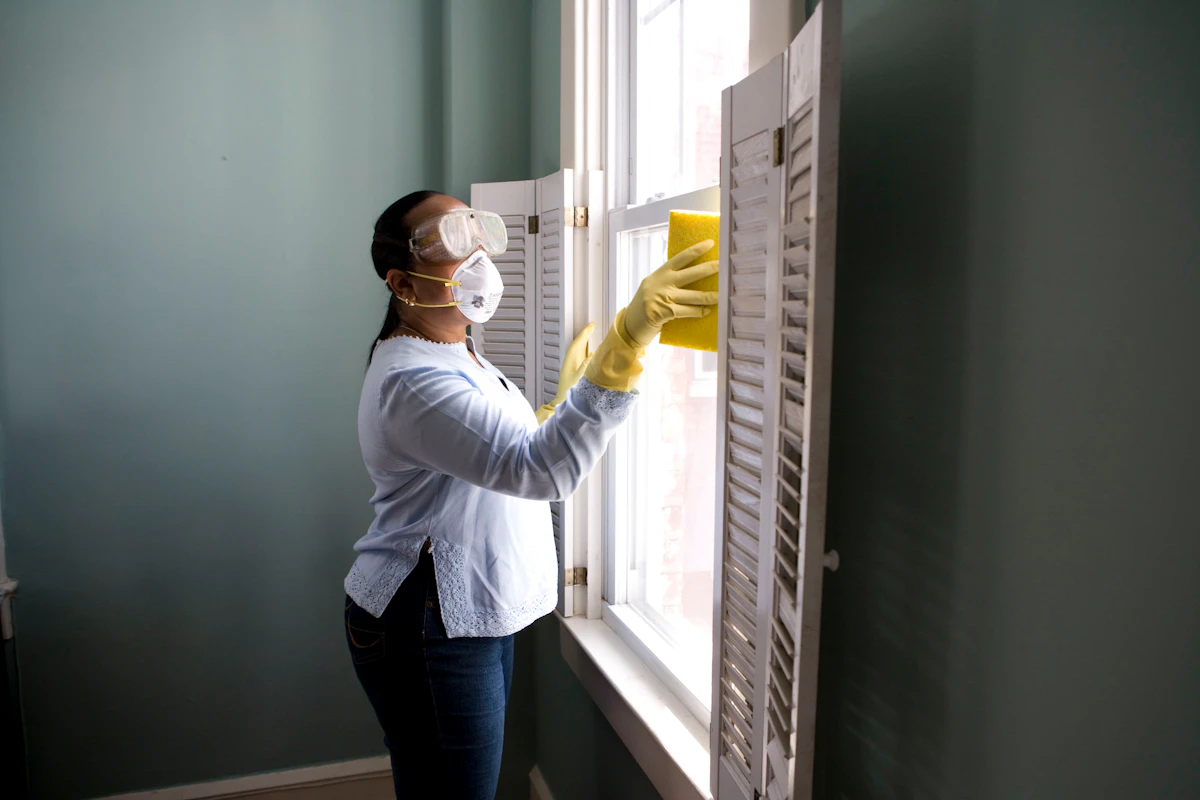
Room-by-room deep cleaning checklist
A deep clean goes in order, top to bottom, so dust and debris fall onto surfaces you haven’t cleaned yet. Here’s the room-by-room checklist we follow on the job. Use it as your own roadmap, or as a way to see exactly what a professional clean should include.
Kitchen
The kitchen earns the most attention for good reason — it’s the germiest room in the house. Degrease the range hood and stovetop, clean inside the oven and microwave, wipe down cabinet fronts, disinfect the sink and drain, pull out the fridge to clean underneath, and replace or sanitize that sponge. The EPA recommends hot water for anything washable, since heat is what actually kills allergens and bacteria.
Bathrooms
Scrub grout and tile, descale the showerhead and faucets, disinfect behind and around the toilet, clean the exhaust fan cover, and wash floors by hand along the edges. Bathrooms hold moisture, and moisture is exactly what mold and mildew need — so drying surfaces after cleaning matters as much as the scrubbing.
Bedrooms
Because dust mites concentrate in beds, bedrooms are where deep cleaning pays off for your breathing. Wash bedding in hot water — the U.S. EPA recommends 130°F to kill dust mites (U.S. EPA). Vacuum the mattress, dust the headboard and vents, wipe baseboards, and clean under the bed where dust settles undisturbed for months.
Living areas
Vacuum upholstery and under cushions, dust electronics and shelves, clean light fixtures and ceiling fans, wash windows and sills, and get the baseboards and corners. One EPA note worth knowing: vacuuming can briefly raise airborne allergen levels, so ventilate the room and, if you’re sensitive, step away while it’s done.
No time to work through the whole list? That’s what we’re here for.
See our cleaning services in Andover, MA and cleaning services in Lowell, MA, or request a free quote for your town.
How long does a deep clean take?
A whole-home deep clean typically takes a small team three to six hours, depending on the size of the home, its condition, and how long since the last one. A first-time deep clean almost always takes longer than a maintenance one — there’s simply more buildup to work through. After that first reset, keeping up is far quicker.
Doing it yourself? Plan for a full day, or spread it across a weekend by tackling one or two rooms at a time. Trying to deep clean an entire home in a single evening is the fastest way to burn out and skip the details that matter most.
Should you book a professional deep cleaning?
A professional deep cleaning makes sense when time, physical strain, or the stakes are high — a move-out, a sale, a new baby, or simply a schedule that doesn’t leave a free day. A trained team brings the right products, a consistent checklist, and the speed that comes from doing this every day. You get the result without losing your weekend to it.
If you’d rather keep the checklist and do it yourself, that’s completely doable — this guide gives you the full roadmap. And when you’d rather hand it off, that’s exactly what we do. For a clean you don’t have to think about, reach out for a free quote and we’ll tell you precisely what your deep clean includes and what it costs.
Ready for a deep-cleaned home?
Lucy’s Cleaning Home serves the Merrimack Valley and southern New Hampshire. Call or text for a free, no-obligation quote.
Frequently asked questions
What’s included in a deep cleaning?
A deep cleaning covers everything a regular clean skips: inside the oven and appliances, grout and tile, baseboards, vents, window interiors, behind and under furniture, and detailed disinfecting of high-touch and high-germ spots like the kitchen sink and sponge area — the NSF’s germiest zone in the home.
How often should I deep clean my house?
Most homes do well with a full deep clean every three to four months, plus monthly attention to high-use spots. Homes with pets, children, or allergies benefit from the shorter end of that range, since dust-mite allergen builds up in beds and upholstery — where it shows up in about four out of five U.S. homes.
Is deep cleaning worth it?
For most households, yes. Deep cleaning removes the allergens and bacteria a surface clean leaves behind — and those are what affect air quality and health. It also protects your home, since built-up grease and grime are harder (and costlier) to fix the longer they sit.
Can I deep clean my home myself?
Absolutely. With a room-by-room checklist, hot water for washable items, and a full day set aside, a DIY deep clean is very doable. Many people choose to hire out only the physically demanding or time-consuming jobs — like the oven, grout, or a whole-home reset before a move.
How long after a deep clean does it stay clean?
With light weekly upkeep, a deep clean keeps a home fresh for around three to four months before the next full reset. The buildup returns gradually, so consistent maintenance in between is what stretches the results the longest.
The bottom line
Deep cleaning is what turns a home that looks tidy into one that’s genuinely clean and healthier to live in. It reaches the allergens in your bed, the bacteria in your kitchen, and the grime routine cleaning never touches. Do it every season, follow the room-by-room order, and use hot water where it counts.
And when you’d rather skip the weekend of scrubbing, Lucy’s Cleaning Home is ready to help. Request a free quote and get a deep-cleaned home without lifting a finger.
Want a spotless home without lifting a finger?
Lucy’s Cleaning Home handles the whole checklist for you — call, text, or request a free, no-obligation quote today.